26 articles. Page 1 of 2.

SEO helps people discover your pages in search results. GEO focuses on making useful, reliable information available for AI-generated answers. Work on the same accurate website, but measure organic rankings, AI mentions, citations and recommendations separately.

Before editing your site, save a dated record of its technical state, target pages, search performance and a small repeatable AI-question sample. This baseline lets you compare later observations without mistaking a different question set for improvement.

A useful 30-day SEO and GEO plan moves through baseline, technical repairs, evidence-led content and a repeatable review. Thirty days is a work schedule, not a promise of rankings, indexing or AI recommendations.

A mention names a brand. A citation links to a source. A recommendation suggests an option for a need. Report these separately, with the answer context and question sample, because none automatically proves the other.

A missing citation can reflect page access, a weak answer, stronger alternative sources, question mismatch or normal answer variation. Diagnose each possibility with the actual question and cited pages before rewriting the whole site.

Audit cited alternatives by recording the exact question, the cited URLs and the information each source contributes. Use the gaps to improve your own explanation, not to copy text or assume every cited domain is a direct competitor.

Build a buyer-question set from real customer decisions, not only keywords. Separate category, problem, comparison and branded questions, then keep the exact wording and sampling settings stable across checks.

Compare AI engines using the same question cohort and clearly separated observations. Report citation presence, source links, timestamps and missing answers per engine instead of combining unlike outputs into a universal rank.

For Google's AI search features, focus on normal search eligibility, accessible text, accurate content and helpful pages. Google's documentation does not prescribe a special AI schema file or an additional technical requirement that guarantees selection.

Local AI visibility starts with truthful business facts, useful service information and questions that reflect where customers actually seek help. Keep local search performance and sampled AI answers separate, and never invent a location to target a city.

Create a city service page only when it helps a customer make a location-specific decision. Real service coverage, local constraints, distinct examples and useful navigation matter more than publishing every city name.

Before a local campaign, verify the public facts customers and AI systems might encounter: name, service area, real locations, hours, contact routes and service restrictions. Fix contradictions before publishing more pages.

A topical map assigns each distinct reader question to one owning page and connects supporting explanations through relevant links. It should reduce duplication, not turn every keyword variation into a separate article.

Use hub-and-spoke links to connect a subject overview, specific supporting articles and relevant product pages. Add links where they help the reader's next decision, with descriptive anchors and real published destinations.

An effective article gives the direct answer first, uses descriptive H2/H3 headings, offers a working table of contents and answers unresolved reader questions in a visible FAQ. Structure supports comprehension; it does not replace useful evidence.

IndexNow notifies participating search engines about changed URLs. Google indexing follows Google's own crawling and indexing systems; ordinary articles are not made eligible for Google's restricted Indexing API merely by submitting them through a tool.

Check the HTTP response, initial HTML, robots rules, canonical and the actual rendered page. A public page should expose its meaningful answer without requiring sign-in, while its browser experience should remain consistent with that answer.
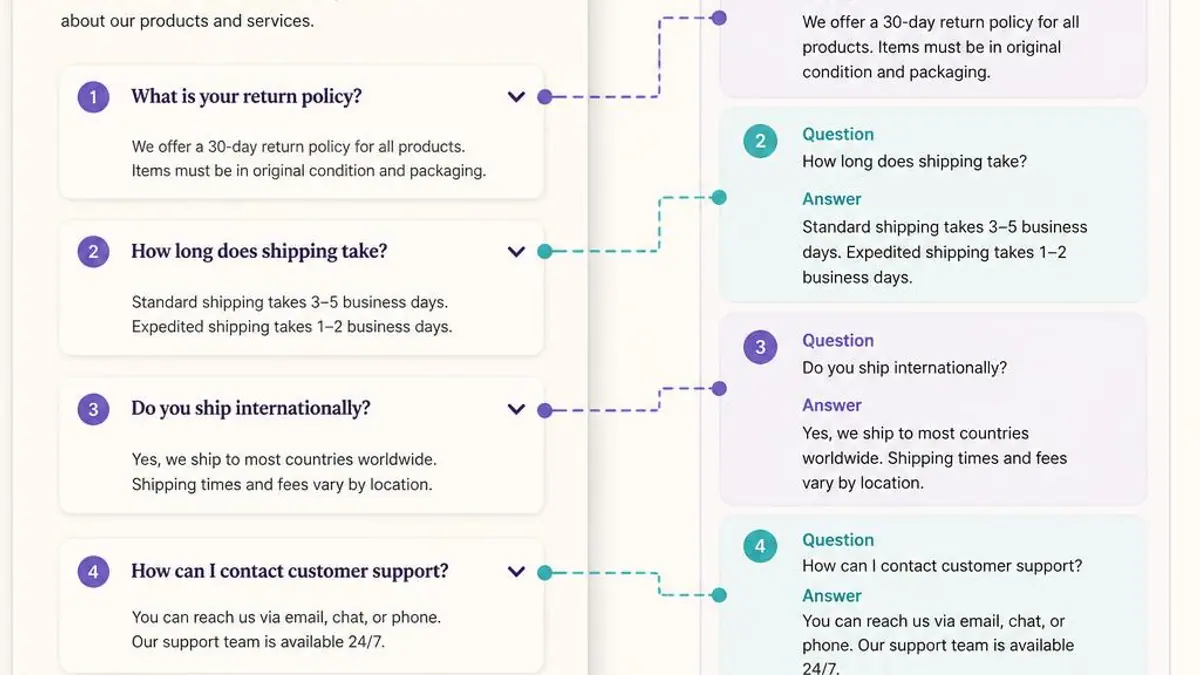
FAQ structured data should describe the questions and answers readers can actually access on the same page. Use accurate JSON-LD, avoid promotional invented answers and validate both the markup and the visible experience.

An honest agency report separates completed work, organic search observations and sampled AI-answer evidence. State the exact question cohort, dates, engines, valid observations and limitations before describing a trend.

Compare AI visibility using an unchanged prompt cohort, documented settings and repeated dated observations. Annotate the content release, but avoid claiming that the release caused every later change.
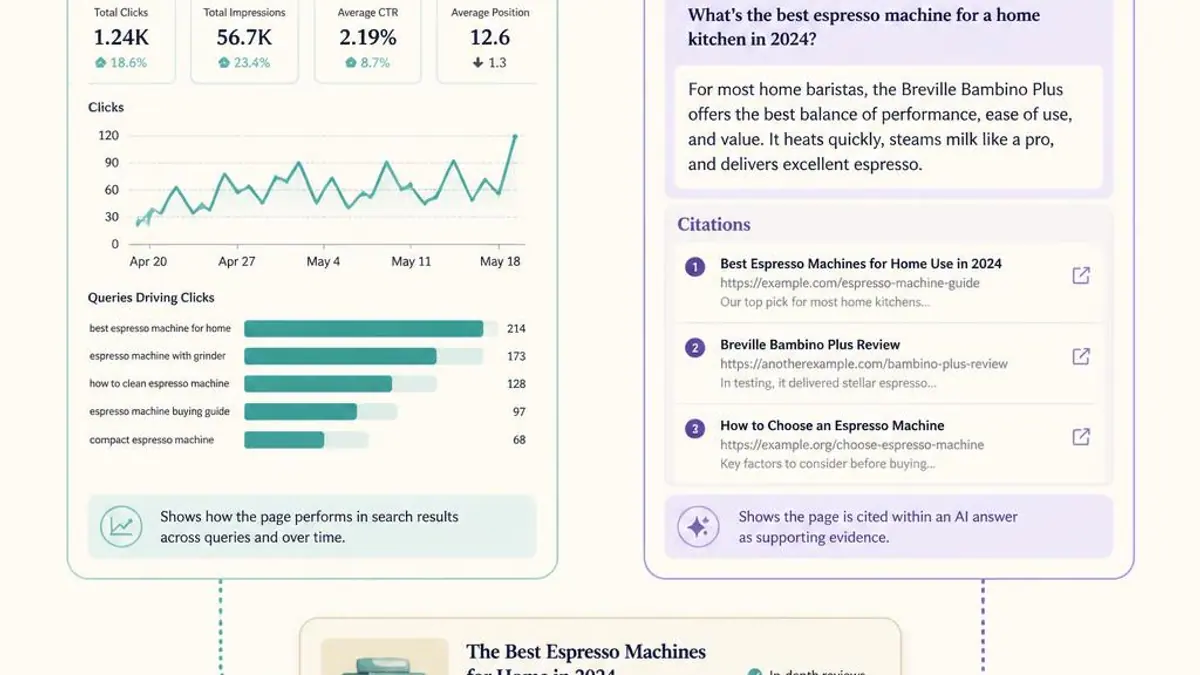
Search Console reports observations from Google Search. AI visibility checks record sampled answers and sources from selected engines. Use both, but do not merge them into a single metric or infer AI impressions from ordinary search impressions.

Use RankZoro to move from a verified business goal to keyword research, a reviewed Ranking Wizard brief, a structured draft and an editorial publication check. Keep generated suggestions separate from verified facts throughout the process.

Turn a GEO audit into a work queue by translating each finding into a specific page, evidence, expected reader benefit, responsible owner and verification step. Prioritize broken access and incorrect facts before optional enhancements.

A manageable weekly RankZoro routine is to review one evidence source, choose one meaningful task, improve one page and record the result. Keep the workload small enough to finish the factual and publication checks.